Intro
When we first had the idea to start this blog, I was excited by the chance to do deep dives into subjects like cetacean communication, rainforests, and all the more “flashy” corners of the natural world. And I promise I will get to them but recently I have instead been pulled in a different direction. Downwards into the easily overlooked world of soil.
Perhaps this is due to spending time recently enriching the soil on my allotment, or from observing a map that my father-in-law has that shows the sheer diversity of soil and rock types across the United Kingdom (astonishingly the UK has over 700 varieties of soil).
What exactly is soil and why should we appreciate it?
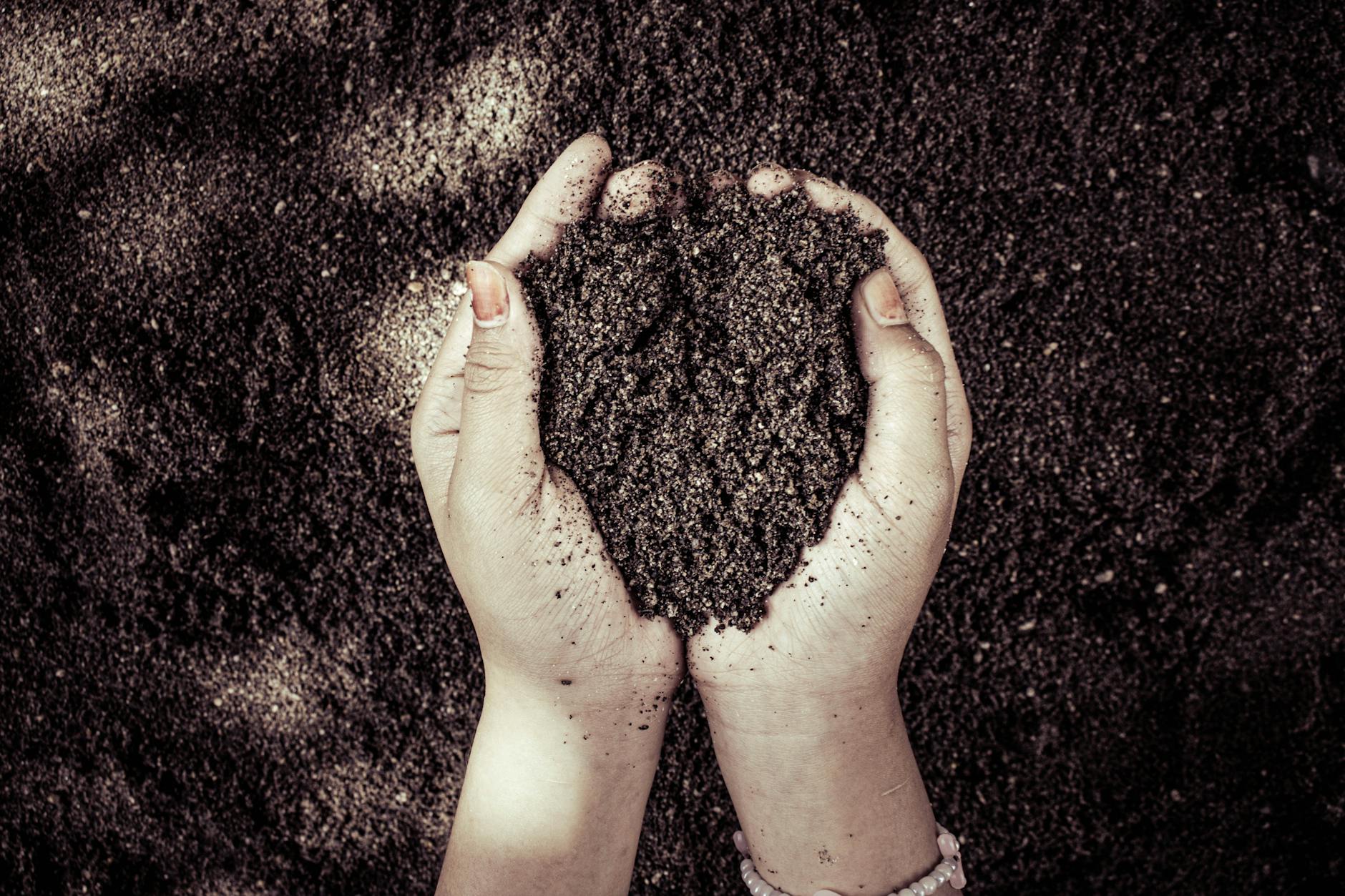
Soil is the thin living layer covering much of the Earth’s surface, it is made up of broken-down rock, organic matter, water and air, it stores more carbon than all the world’s plants, and forests; and in just one teaspoon can contain more organisms than there are people living on earth.
Aside from these jaw dropping facts as a species, we rely heavily on soil – for water filtration, housing a quarter of the planet’s total biodiversity. And perhaps most crucially, 95% of our food production is reliant on soil. And yet we are losing it at an alarming rate.
Why it is struggling and why it is a problem
It takes hundreds of thousands of years to form just a single inch of topsoil, and we degrade the quality and security of healthy soil with numerous shortsighted ways.
Most soil degradation is a result of how intensively we push it to its limit through intensive agriculture, deforestation, urbanisation of land, and over irrigation.
Frequent ploughing breaks down the structure of the soil, leaving it vulnerable to erosion. Another farming practice that jeopardises soil quality is monocrop agriculture (repeatedly growing the same crop in one area). This can drain the soil of nutrients, accelerates erosion and will likely result in the requirement of synthetic fertilisers and pesticides.
When we urbanise land, we seal it with concrete which doesn’t just cover the soil, it effectively kills it. Being cut off from water, air, and organic matter – the life within the soil begins to die.
A knock-on effect of this is that where rain would previously filter through the soil and nourish it, it now will run off, which in turn can carry pollutants into rivers and streams and raise the risk of flooding.

Deforestation and land conversion remove the roots that bind soil together, leaving it exposed to wind and rain. But soil isn’t only damaged physically. Over-irrigation washes nutrients away and leaves salts behind, gradually degrading the land until it becomes difficult for plants to survive at all.
The consequences of soil degradation reach far beyond the ground beneath our feet. Healthy soil is one of our most important carbon stores, but when it’s damaged, that carbon is released back into the atmosphere, adding to climate change instead of helping to slow it down.
At the same time, poorer soil means lower agricultural productivity. Yields drop, food prices rise, and we become more reliant on imports and more exposed to disruptions elsewhere in the world.
There are physical impacts too. Without stable, absorbent soil, the land is more vulnerable to erosion and flooding, problems that are already becoming more frequent and more severe.
Historical precedent
The ancient Sumerians, who resided around 4000BC in what is now Iraq, are often regarded as one of the first civilisations to transform farming into a large-scale system. This allowed populations to settle and cities to grow. They developed innovations like the seeder plough and built complex irrigation networks of canals, dams, and reservoirs to control river water in an otherwise dry landscape.

At first, these methods were hugely successful. Crop production increased, populations expanded, and cities flourished. But the very practices that drove this success also began to undermine it.
Intensive irrigation, especially in a hot climate, caused water to evaporate and leave salts behind in the soil. Over time, this salinisation made the land less and less fertile. Yields declined, and farmers were forced to switch from wheat to more salt-tolerant crops like barley. This was a temporary fix rather than a solution, and eventually the system became unsustainable, contributing to food shortages and wider societal decline.
Fast forward around 4000 years later 19th century Europe finds itself in an agricultural crisis. As farming intensified nutrients were extracted faster than they could replenish and traditional fertilisers couldn’t keep up with the demand for production. Their solution to this problem was to import guano (bird, bat, and seal excrement) from Peru who managed to build their economy off this demand. The demand grew so much that wars were even started to control the guano deposits.
Whilst initially effective in the short term this highlights how soil fertility has long been treated as something to extract from elsewhere rather than sustain locally. It is also a good example of global dependence on external nutrient sources, a pattern we still follow today with industrial fertilisers.

Just a century later we see a similar tale unfold in America with the dust bowl of the 1930’s. Crops replaced deep rooted grasslands of the great plains, and the expansion of ploughed land was rapid as there were numerous unusually wet years, giving the farmers false confidence In the stability of the climate. When a drought hit in the 1930’s the dry and exposed topsoil wasn’t held in place, this resulted in huge dust storms that displaced hundreds of thousands of people and became a monumental manmade ecological disaster. In neither case had we learned that we need to not see soil as something to exploit, but something to preserve.

Across thousands of years, from ancient Mesopotamia to modern industrial farming, the pattern is hard to ignore. Soil is pushed beyond its limits, short-term gains are prioritised, and when the system begins to fail, the response is often to compensate rather than restore. Today, much of agriculture still follows a model of practice where profit maximisation and corporate domination take precedence over environmental sustainability and food security.
What can be done?
Whilst most of the ownness is on the farming community, and governments to legislate and incentivise better practices there are still efforts we can make as individuals to help keep soil healthy, and productive. Composting kitchen and garden scraps returns vital nutrients and organic matter to the ground, reducing the need for chemical fertilizers. Gardening sustainably by avoiding peat-based composts and minimizing hard surfaces like concrete helps soil stay alive and vibrant. Where possible and when information is freely available try and support local and organic producers who use regenerative practices such as zero tillage, cover cropping, and crop rotation all of which help combat erosion on a larger scale.
History shows that ignoring soil has consequences. Let’s learn from the past and treat the ground beneath us as a precious foundation for life, not a limitless resource.
Leave a Reply